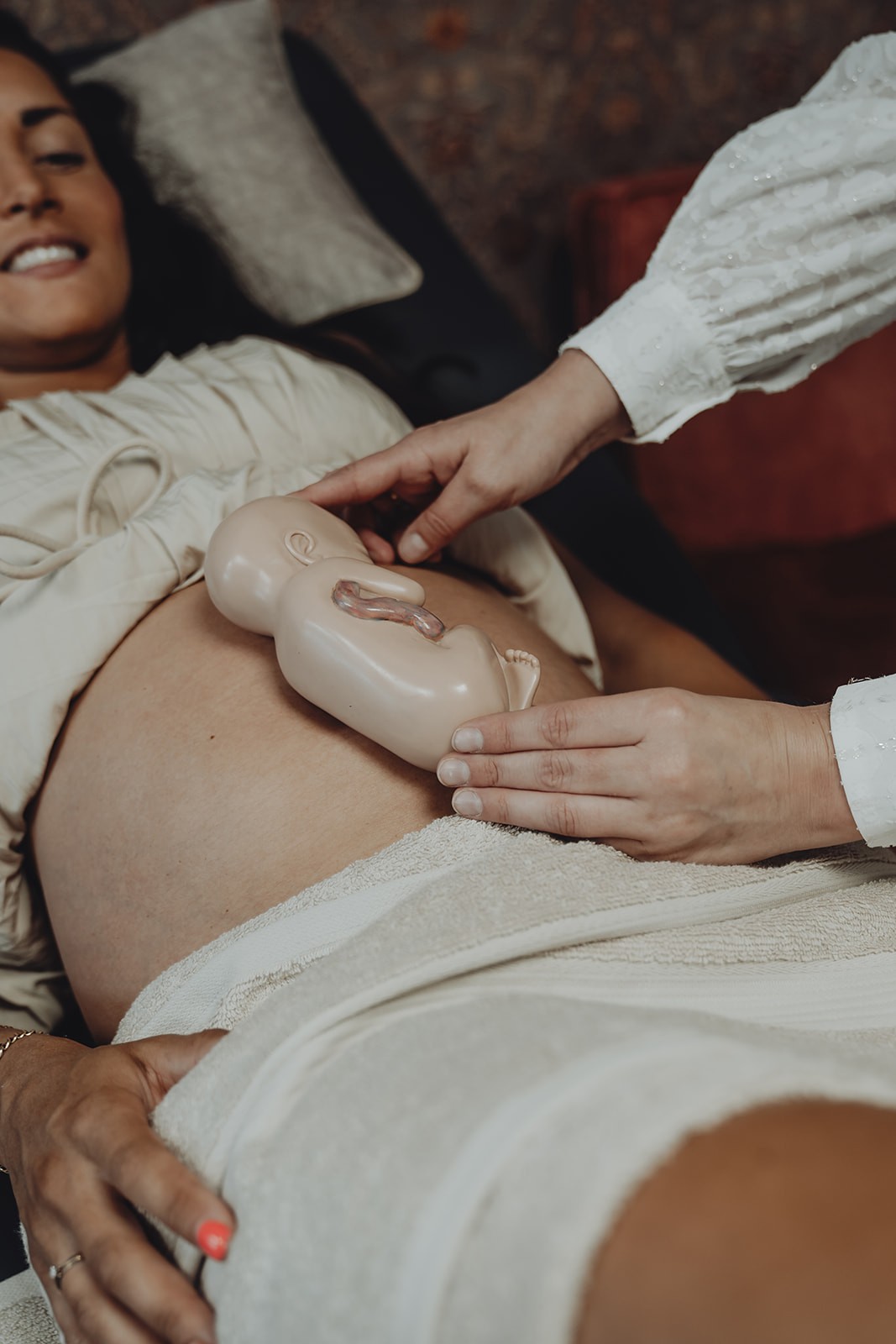


Contraception consultation
Your UNIQUE journey with Uniek Geboortezorg continues even after your pregnancy has ended, when you may be exploring the different contraception methods available. Every woman is unique, which is why during a contraception consultation we discuss your wishes with you and go through the various contraceptive methods. Of course, we also take your medical history into account. Do you choose a hormonal or copper IUD? You can also have it inserted at our practice.
Even if you are not yet registered with our practice or have never been pregnant before, you are very welcome to book a contraception consultation. This appointment takes approximately 30 minutes.


Implanon
Implanon is a small, flexible contraceptive implant that is placed under the skin of the upper arm. The implant continuously releases a low dose of the hormone etonogestrel, which helps prevent pregnancy. This hormone suppresses ovulation and makes the mucus in the cervix less accessible to sperm.
Implanon is a highly reliable form of contraception, with an effectiveness of over 99%, and works for up to three years. The implant is inserted under local anaesthetic and can be removed at any time. After removal, fertility usually returns quickly.
The benefits of Implanon are that you do not have to think about contraception every day and that it provides long-term protection. Possible side effects include irregular bleeding, headaches, acne or mood changes. Not everyone experiences these side effects.
Please contact us for advice or to have the implant inserted or removed.
IUDs
An IUD is a highly reliable form of contraception that can be combined well with breastfeeding.
There are two types of IUDs: the hormone-free copper IUD, such as T-Safe, Multi-Safe Short and Flexi-T, and the hormonal IUD, such as Mirena and Kyleena.
IUD without hormones
A copper IUD is hormone-free contraception. T-Safe is the most commonly used copper IUD in the Netherlands. This IUD can be used for up to 10 years and meets the highest quality standards. A copper IUD is suitable for all women who choose reliable contraception without hormones.
Immediately after insertion, the IUD gradually releases a small amount of copper. Copper immobilises sperm cells and prevents an egg from being fertilised. Copper also prevents a fertilised egg from implanting in the lining of the uterus. After insertion, you are protected against pregnancy for 5 years, or even up to 10 years with T-Safe.
With a copper IUD, you keep your own menstrual cycle. In the first few months after insertion, your period may be different than usual. Most women experience little to no discomfort from the IUD. Others may experience side effects such as heavier, longer-lasting or irregular bleeding. Some women may also experience severe abdominal cramps. After a few months, your body usually gets used to the copper IUD and your natural cycle returns. A small number of women continue to experience slightly heavier bleeding during their period.
The copper IUD can also be used as an “emergency IUD” when inserted within 5 days after unprotected sex. This prevents a potentially fertilised egg from implanting in the lining of the uterus. A copper IUD is the most effective form of emergency contraception. Want to know more about emergency contraception? Visit morning-after.nl.

IUD without hormones
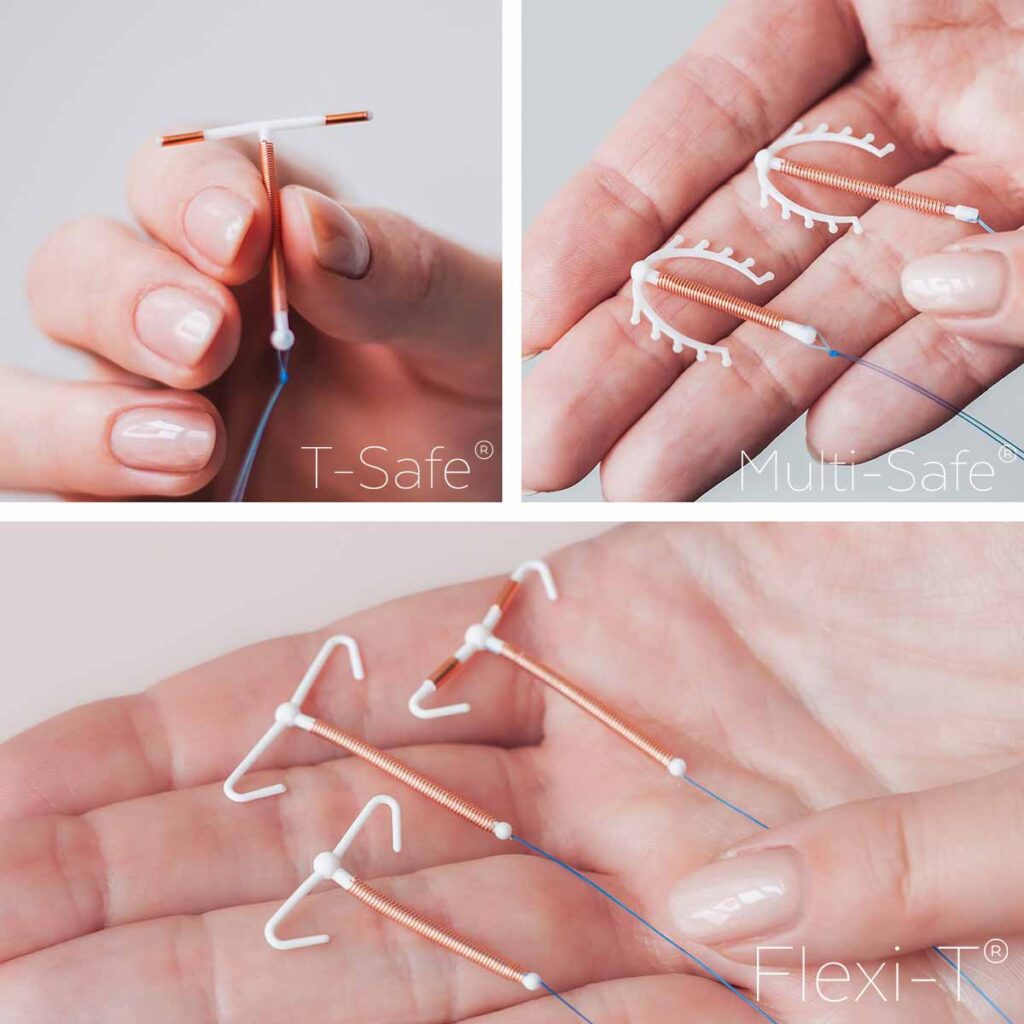
There are different types of copper IUDs:
T-Safe
The T-Safe has a T-shape and is made of plastic and copper. According to the Dutch College of General Practitioners, the TCu380A, T-Safe, is the most reliable copper IUD. The T-Safe copper IUD is effective for 10 years, but can also be used between two pregnancies. T-Safe is the most commonly used copper IUD in the Netherlands.
Multi-Safe Short
The Multi-Safe IUD has a horseshoe shape and is made of plastic and copper. The Multi-Safe is suitable for women with a uterus larger than 6 cm, while the Multi-Safe Short is suitable for women with a smaller uterus. The Multi-Safe Short is effective for 5 years.
Flexi-T
The Flexi-T has a T-shape with rounded corners and is made of plastic and copper. There are three options: the Flexi-T 300 for a small uterus, and the Flexi-T +380 and Flexi-T +300 for a larger uterus. The Flexi-T +380 contains more copper to increase its effectiveness. Flexi-T IUDs are effective for 5 years.
IUD with hormones
A hormonal IUD gradually releases a small amount of hormones and causes the mucus in the cervix to become thicker, making it more difficult for sperm cells to pass through. The release of the hormone levonorgestrel in the uterus makes sperm cells less mobile, which reduces the chance of fertilisation. Because of the hormone release and because the IUD is a “foreign object” in the uterus, the lining of the uterus does not build up, or only builds up very little. This means that a potentially fertilised egg cannot implant. Finally, in some women, ovulation is suppressed. If no egg is released, fertilisation cannot take place.
The most common side effects of a hormonal IUD are heavier or lighter bleeding during your period, bleeding between periods or no periods at all. Headaches, abdominal pain and back pain may also occur, as well as vaginal discharge and inflammation of the labia or vagina.
There are two types of hormonal IUDs:
Mirena is the most commonly used hormonal IUD in the Netherlands. This hormonal IUD is effective as contraception for 8 years. Mirena can also be used to treat heavy menstrual bleeding.
Kyleena is a slightly smaller hormonal IUD than Mirena. This hormonal IUD also releases slightly fewer hormones. Kyleena is effective as contraception for 5 years.

IUD insertion
The insertion of an IUD is usually quite quick. A speculum is used to make the cervix visible. We then measure your uterus and the IUD can be inserted. Please note: before having an IUD inserted, it is important that there is no risk of you having an STI or being pregnant. Therefore, make sure you use protection during sex until the insertion. If you are unsure, please discuss this with us.
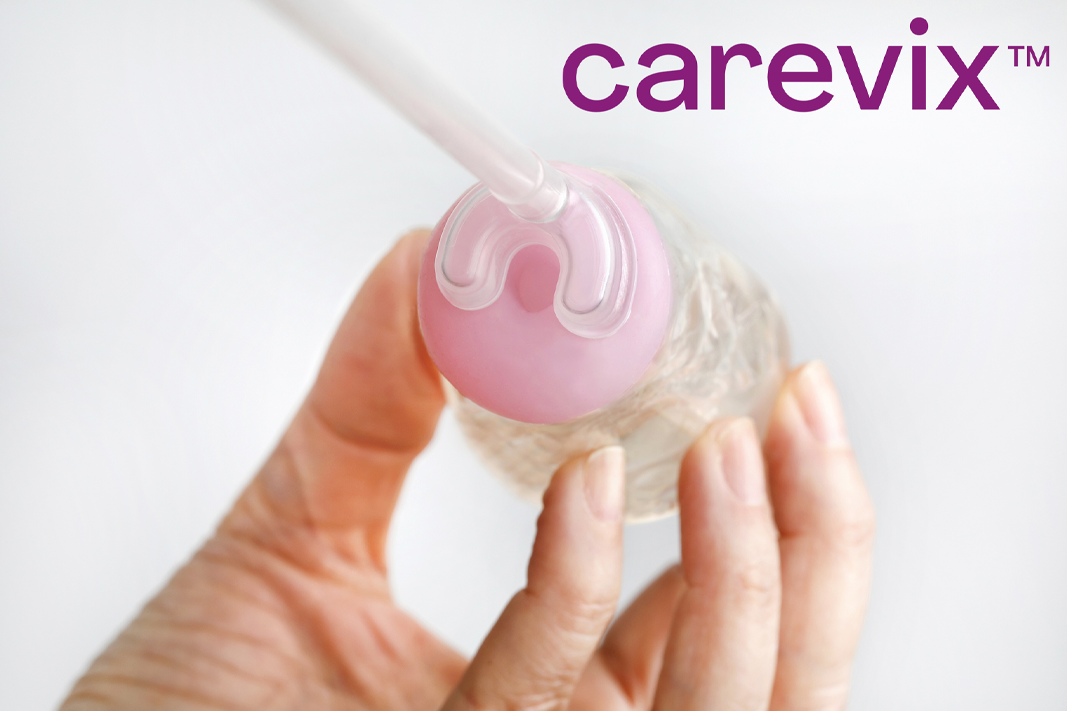
Having an IUD inserted can feel a little daunting. At Uniek Geboortezorg, we therefore take our time, explain everything calmly and let you set the pace. We do everything we can to make you feel as comfortable as possible. To make the insertion more comfortable, it is also possible to use Carevix. This is an innovative alternative to the traditional tenaculum. Instead of clamping with hooks, Carevix uses gentle suction to keep the cervix in place. As a result, women experience less pain and there is a lower risk of bleeding.
Would you like to know whether Carevix is suitable for you? Ask us during your contraception consultation or contact us.
Please note: this alternative is not reimbursed by health insurance.
Follow-up check
After insertion, we will schedule a follow-up check. This takes place six weeks after insertion or after at least one menstrual period. During the follow-up check, we make sure the IUD is still correctly positioned and discuss whether you have any symptoms or concerns.
IUD removal
If you would like to have your IUD removed, you can also come to us. After removal of the IUD, you are fertile again immediately.
Insertion costs
The cost of having an IUD inserted is €77.85. These costs can be claimed from your health insurer. Please note that your health insurer may not reimburse all costs, or that the amount may be deducted partly or fully from your excess. This depends on your insurance provider and policy.
Please note: the cost of the contraceptive device itself is not covered by basic health insurance for women aged 21 and over, unless they have additional insurance for this.

Who inserts the IUDs?
Our IUDs are inserted by Vera and Yvonne.